
Styling
How to Layer Necklaces the Right Way
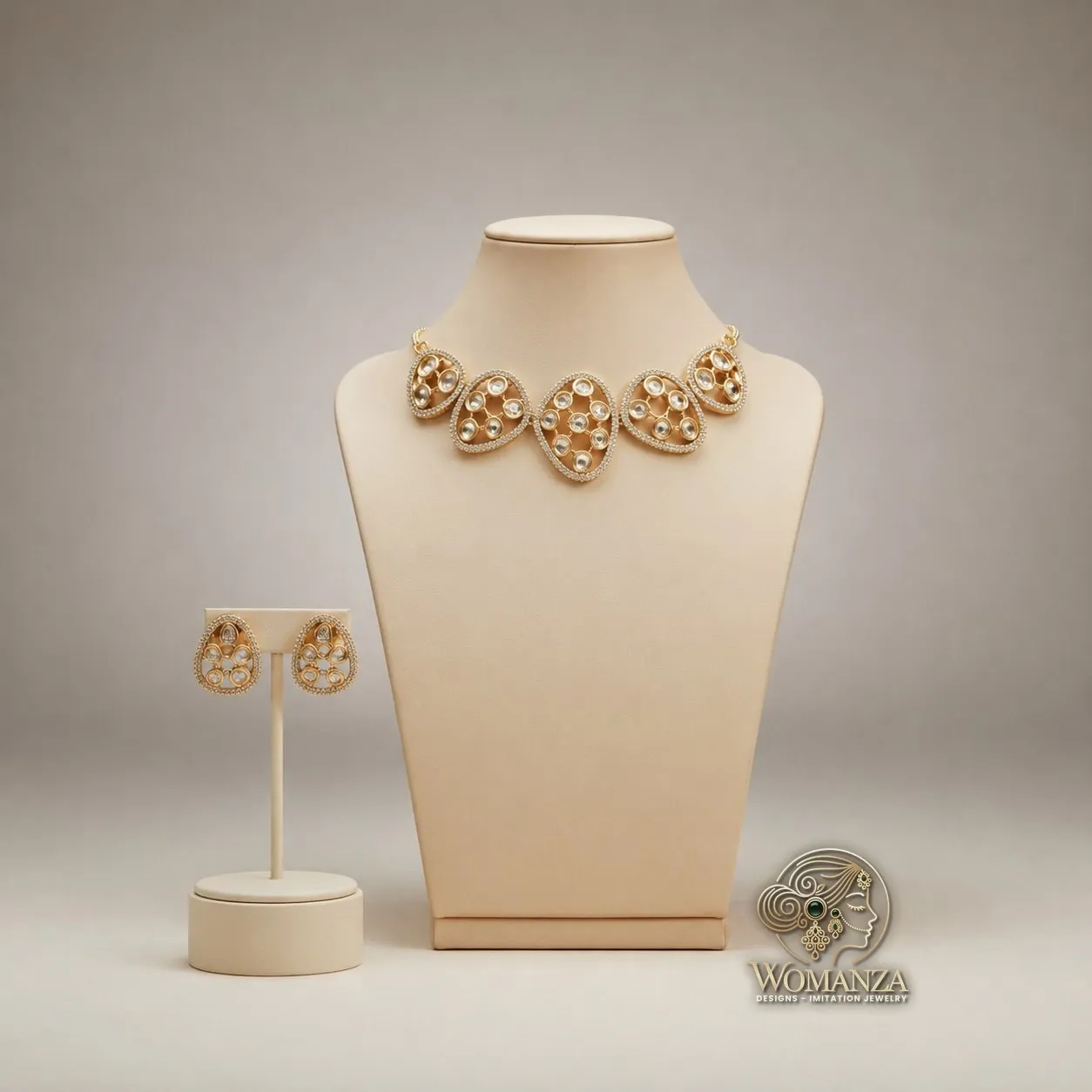
Layering necklaces looks effortless on other people and mysteriously messy when you try it at home. The chains tangle, everything sits at the same height, and somehow the whole thing reads as clutter rather than considered. The good news is that layering is far more about a few quiet rules than about instinct. Once you understand how lengths, spacing, and finishes work together, you can build a stack that looks intentional every single time.
Start With Varying Lengths
The single most important rule is that your necklaces must sit at different heights. When two chains land in the same spot, they compete, tangle, and flatten each other. When they are staggered, each one gets its own line of attention and the eye travels pleasantly down the neckline.
Think of it as three broad zones: a piece close to the base of the throat, a mid-length piece resting on the collarbone or just below, and a longer piece that drops toward the chest. You do not need all three at once — even two well-spaced lengths read as a deliberate layer. If you own necklaces with adjustable extenders, use them; an extra couple of centimetres is often all it takes to separate two chains that would otherwise clash.
Anchor the Stack With One Hero Piece
Every good layer has a leader. Choose one necklace to be the focal point and let the others support it rather than shout over it. A necklace with a clear pendant, a stone, or a distinct shape naturally draws the eye and becomes your anchor, while thinner or plainer chains fill in around it.
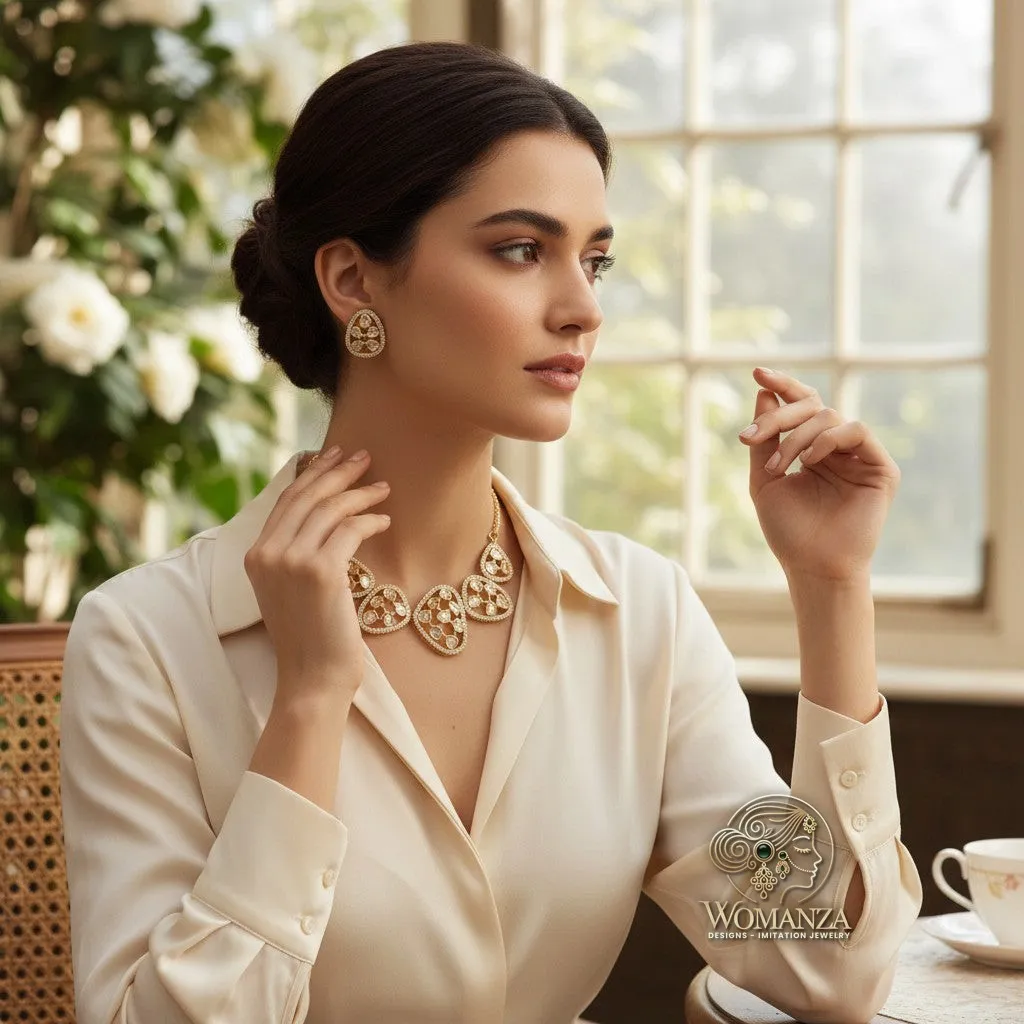
A piece like the contemporary gold-plated necklace with stud earrings works beautifully as an anchor because it has enough presence to lead without overwhelming. Build outward from a piece like this: a fine chain above it, perhaps a slightly longer one below, and you have a stack with a clear centre of gravity.
Mind the Spacing and Textures
Spacing is where layering either sings or fails. Aim for gentle, even gaps between each length so no two pieces crowd. If a chain keeps sliding into the one below, a small necklace spacer or a subtle length swap solves it instantly.
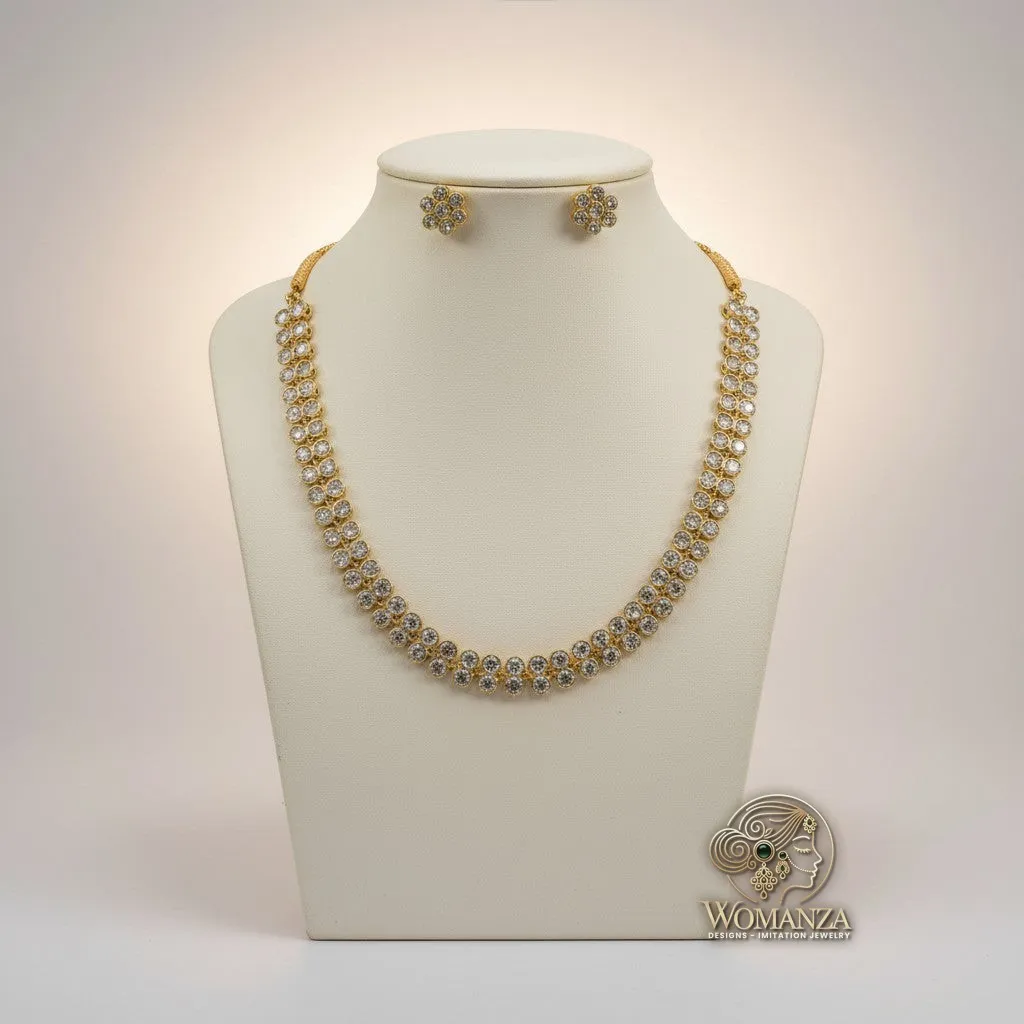
Texture is the second half of this equation. Mixing a delicate chain with a beaded or stone-set piece adds depth, because the difference in surface catches light in different ways. A sparkling, crystal-set layer such as the Aurelia crystal necklace set sits happily against a plain polished chain, each making the other look more intentional. Contrast in texture keeps a stack from looking flat, even when the colours are close.
Mixing Metals and Colour
The old rule that gold and silver must never meet has quietly retired. Mixed metals now look modern and considered, provided you give them a reason to belong together. The easiest shortcut is a single piece that already carries more than one tone, so the mixing is done for you.
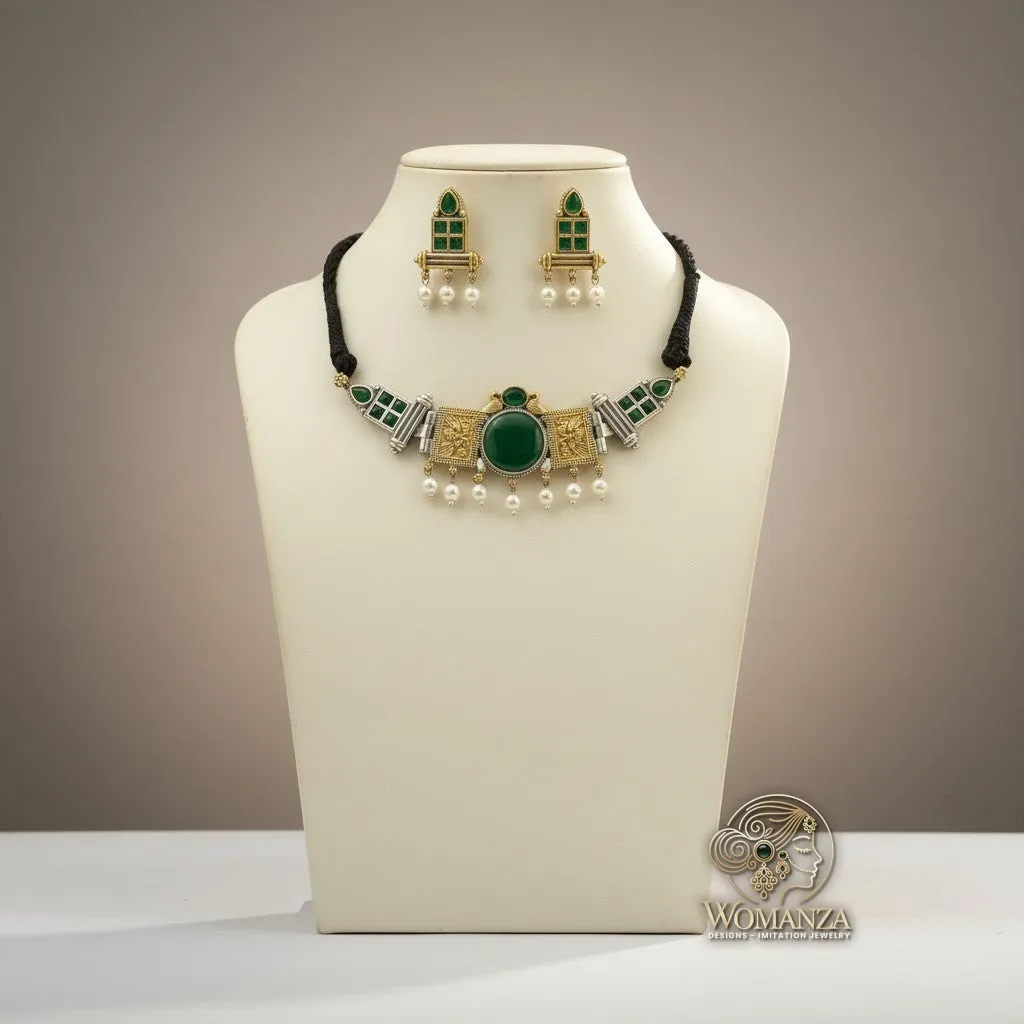
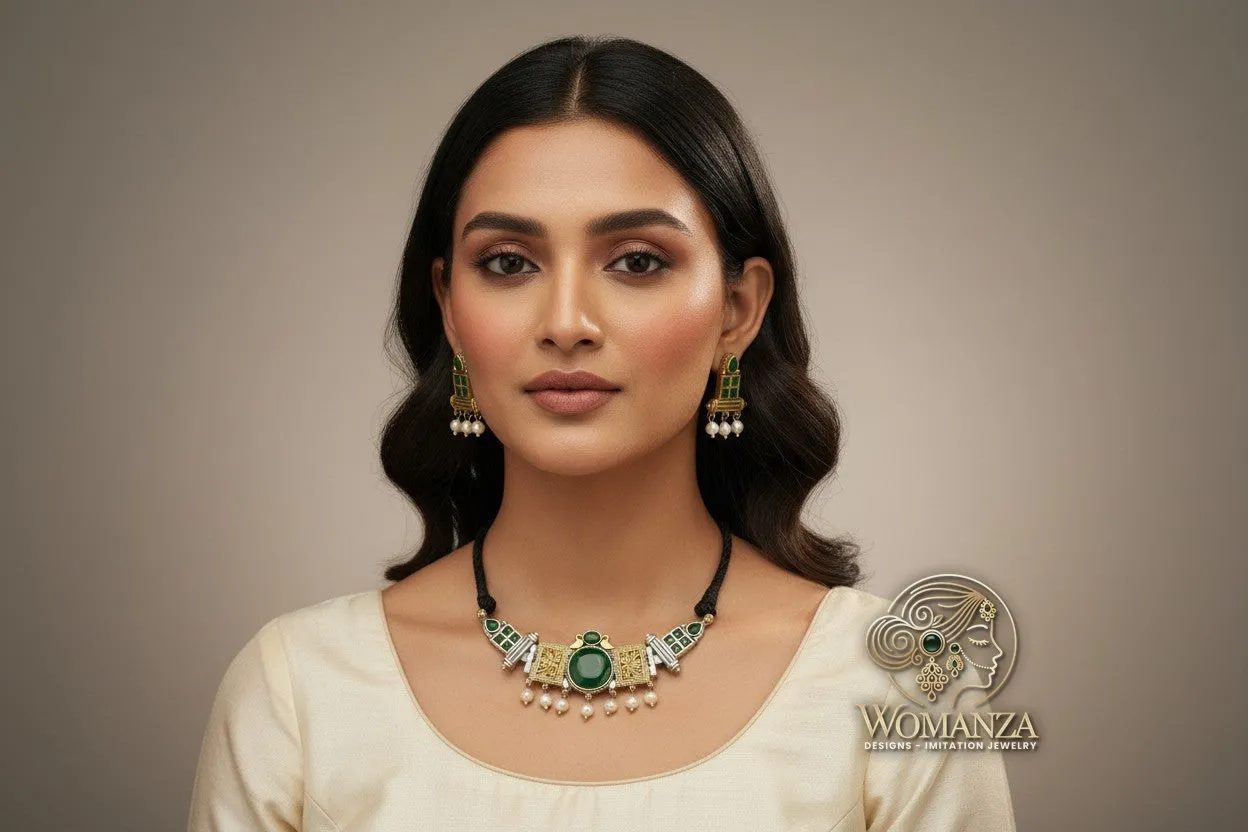
A dual-tone green-stone choker set with pearl drops is a lovely bridge here, tying warm and cool tones together with a touch of colour so the rest of your stack can borrow from either side. When you introduce colour, let one shade lead and keep the supporting chains neutral, so the stone stays the story.
Knowing When to Stop
The hardest skill in layering is restraint. A stack should feel gathered, not piled. Once you find yourself untangling more than admiring, you have gone one piece too far. Add your layers in front of a mirror, then remove the last thing you put on — that final piece is almost always the one tipping balance into busyness.
If you are still building your collection, browse the necklaces range and start with two versatile lengths before adding a third. A small, well-chosen set of chains will layer in more combinations than a drawer full of pieces that only work alone.
Layering rewards patience far more than it rewards quantity. Get the lengths, spacing, and textures right, know when to stop, and even the simplest chains will look like they were made to be worn together.
Shop this story

Personal styling, on WhatsApp
Not sure what suits you?
Message us — Ankita Gupta's team will help you choose and share close-up photos.
Ask us on WhatsAppKeep reading