
Story
Devotional Jewellery: Wearing the Gods Without Costume
There is a particular hesitation people have about deity jewellery. They love the pieces, and then they wonder whether wearing a god around the neck is going to read as devotional, as theatrical, or as slightly too much.
It is a fair question, and the answer is mostly about craft. A deity piece made carefully reads as jewellery that happens to carry a face. A deity piece made carelessly reads as a souvenir. The difference is visible from across a room, and it is worth knowing what creates it.
Two completely different traditions
Most devotional jewellery in India comes out of one of two making traditions, and they produce very different objects.
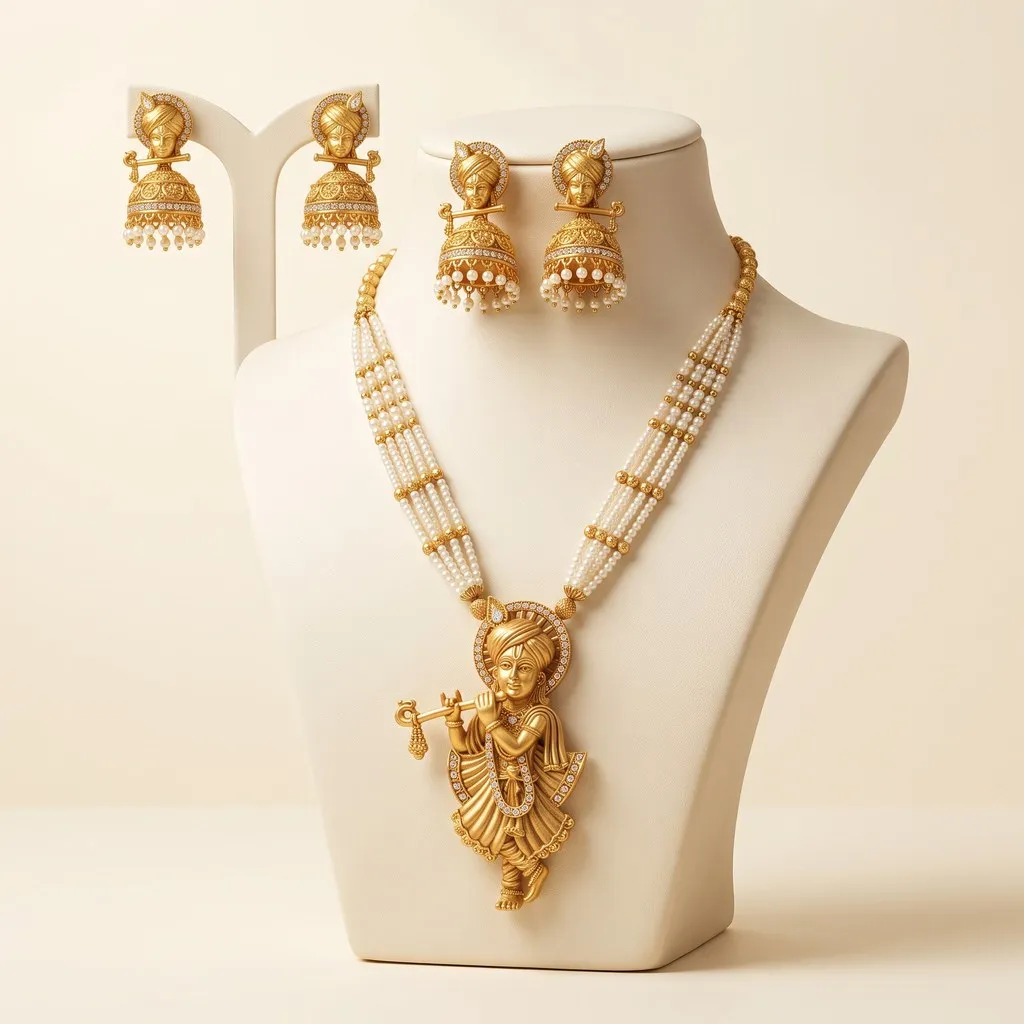
Cast metalwork is the temple tradition — the deity is sculpted in relief, and the detail lives in the depth of the casting. The Antique Gold Krishna Rani Haar Necklace Set is this kind of piece: Krishna with his bansuri cast in fine relief, the turban, the peacock crest and the pleats of the dhoti all picked out, on brass finished in a carat gold polish. Four strands of pearls fall into the pendant at rani haar length.
What tells you a cast piece is good is the face. Faces are the hardest thing to cast well, and cheap moulds go soft exactly there — the features blur, the expression flattens. Look at the eyes and the mouth before anything else.
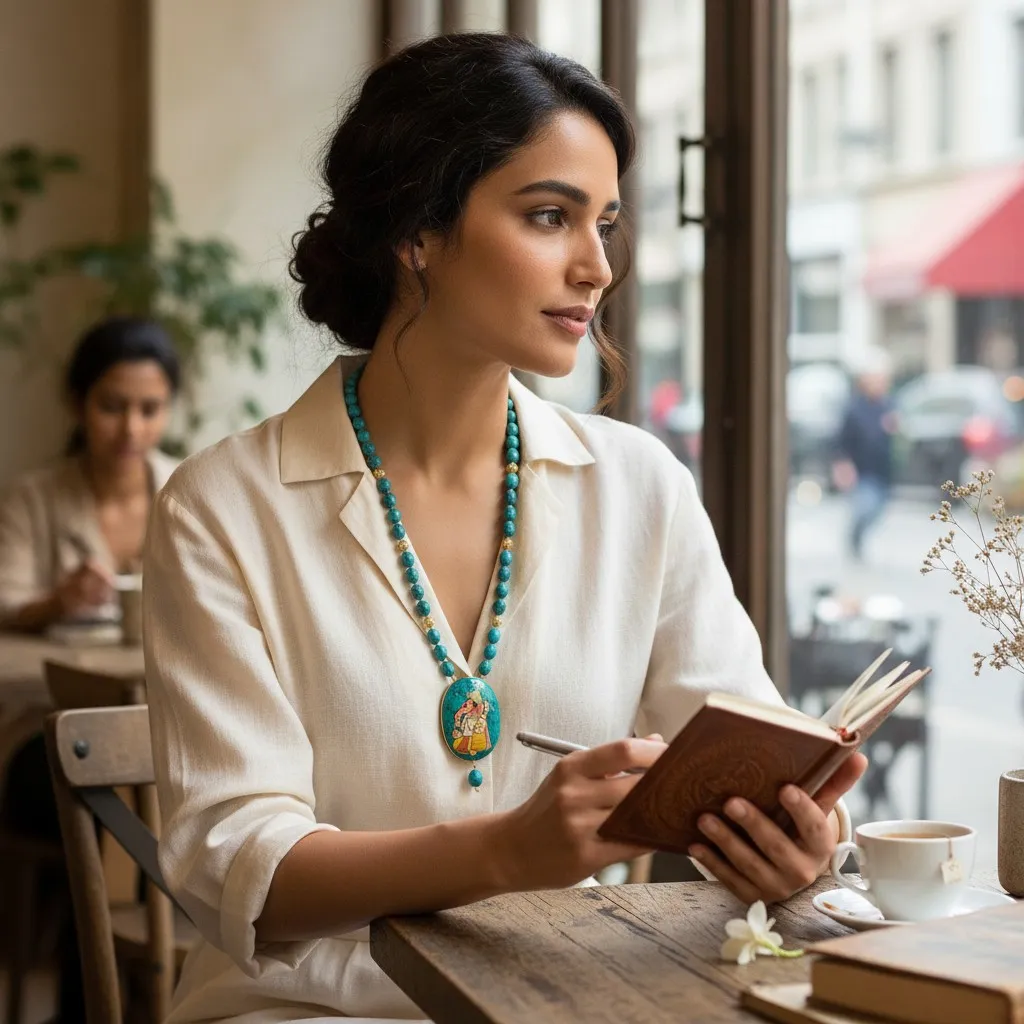
Hand-painted miniature work is the other tradition, and it is a completely different craft — closer to painting than to metalwork. The Hand-Painted Ganesha Turquoise Mala Necklace is Rajasthani miniature detail brushed directly onto a natural turquoise cabochon: the crown, the trunk, the saffron-and-gold robes, all in brushwork fine enough that you need to be close to see it properly.
The Hand-Painted Shrinathji Natural Stone Pendant Necklace comes from the Nathdwara Pichwai tradition — the darshan face, the crown, lotus buds and leaves, painted onto a natural stone slice edged in a gold-tone rim that follows the stone’s own irregular shape.
Because the stone is naturally formed and the painting is done by hand, no two of these are the same piece. That is not a marketing line; it is a structural fact about how they are made.
Motif rather than face
There is a third option people often miss, and it is frequently the easiest to wear: the motif without the face.
The Royal Elephant Handcrafted Statement Necklace Set carries elephant detailing from the winged crest down to the sculpted trunk — unmistakably devotional in reference, since the elephant is Ganesha’s own form, but with no face to negotiate. The Antique Lakshmi Coin Necklace Set does the same through coin medallions rather than portraiture.
If you like the tradition but feel uncertain about wearing a deity’s face, this is where to start.
How to wear it without looking costumed
Three things, and they are all about restraint.
One devotional piece per look. A deity necklace with temple jhumkas and an oxidised deity ring is a costume. A deity necklace with plain gold studs is jewellery. The piece needs quiet around it.
Let the outfit stay simple. Devotional pieces carry a lot of visual information already — a face, a crown, often colour. A solid-toned kurta, a plain silk blouse or an unworked saree gives all of it room. Heavily embroidered outfits turn a deity pendant into clutter.
Choose the scale for the occasion. A large hand-painted pendant is right for a puja day, a temple visit or a festival. For an ordinary day, a smaller cast motif does the same job without announcing itself.
On wearing them respectfully
This comes up often enough to be worth saying plainly: there is no single rule, and different families hold different views.
Broadly, wearing a deity as jewellery has a long precedent in India, and most people treat it as an expression of devotion rather than a problem. The conventions that do exist are practical — many prefer to remove such pieces before entering a bathroom, and to store them somewhere considered rather than loose in a drawer.
If your family observes particular customs, follow those. If someone you are gifting to might feel strongly, ask first. A motif piece is the safer gift when you are unsure.
Where to look
Our Ganesh Chaturthi edit gathers the devotional pieces together — hand-painted work, temple motifs and elephant detailing, from small everyday pendants up to full statement sets. The temple jewellery and chokers page covers the heritage silhouettes that sit closer to the neck.
And if you are choosing a first devotional piece and are not sure which tradition suits you, message us. It is exactly the kind of decision that is easier in a conversation than on a product page.
Shop this story
Antique Gold Krishna Rani Haar Necklace Set with Pearl Strands & Jhumkas
₹3,000 View & enquire →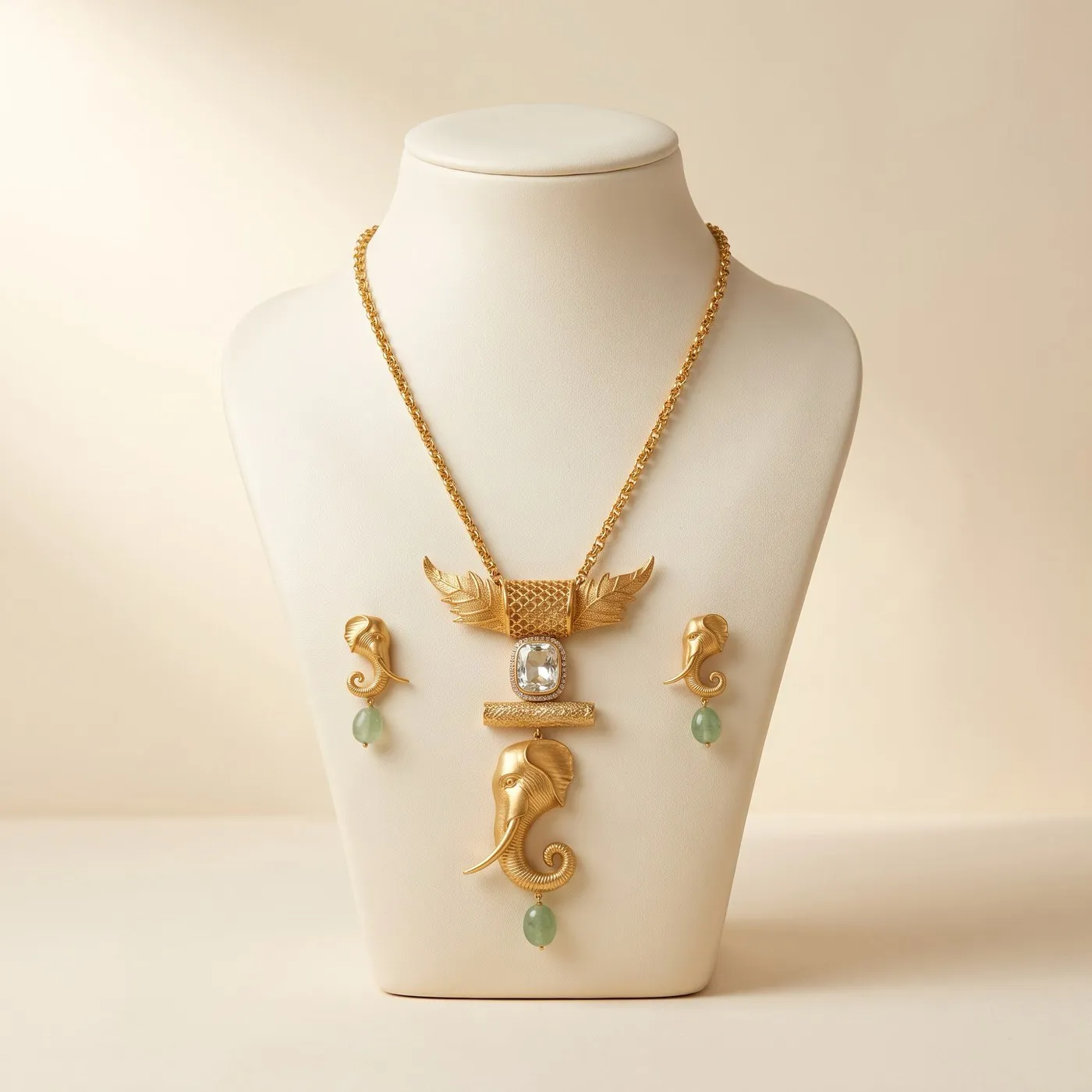
The Royal Elephant Handcrafted Statement Necklace Set
₹5,500 View & enquire →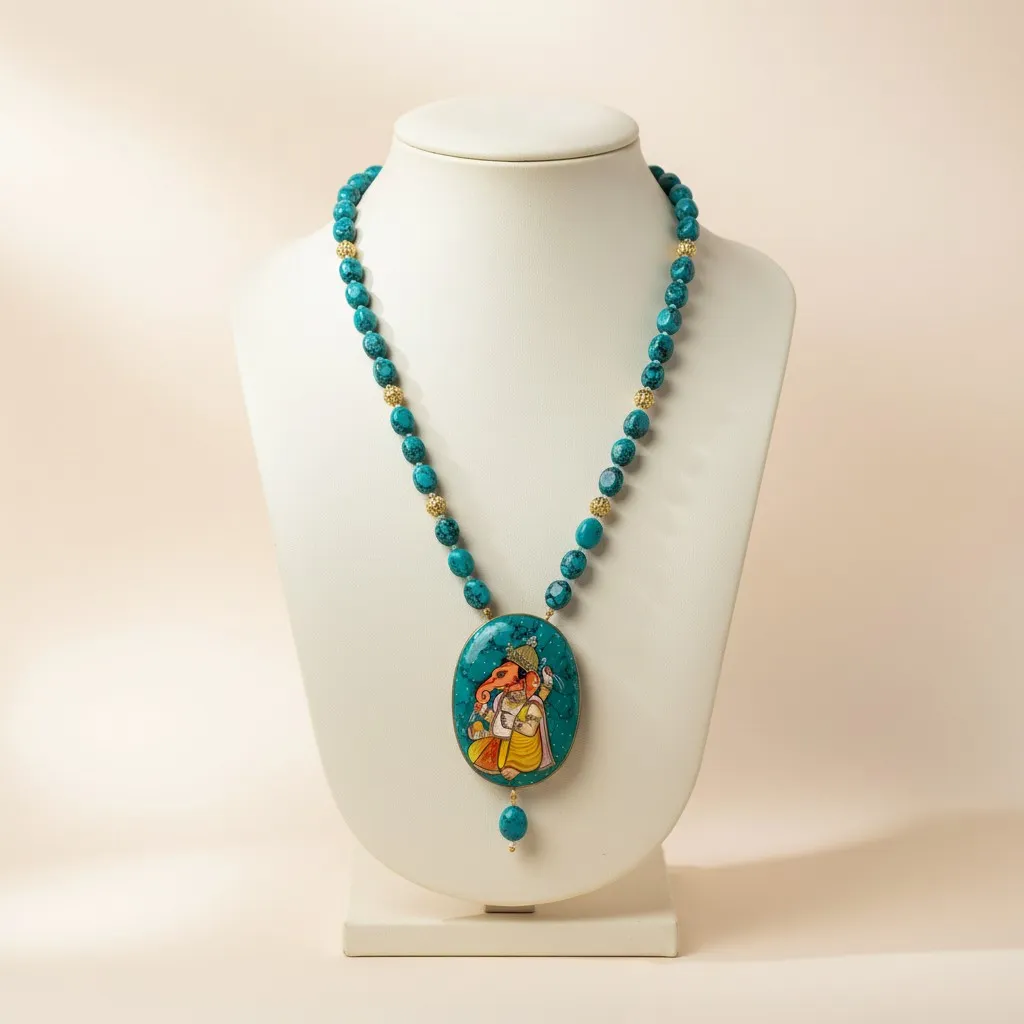
Hand-Painted Ganesha Turquoise Mala Necklace
₹1,799 View & enquire →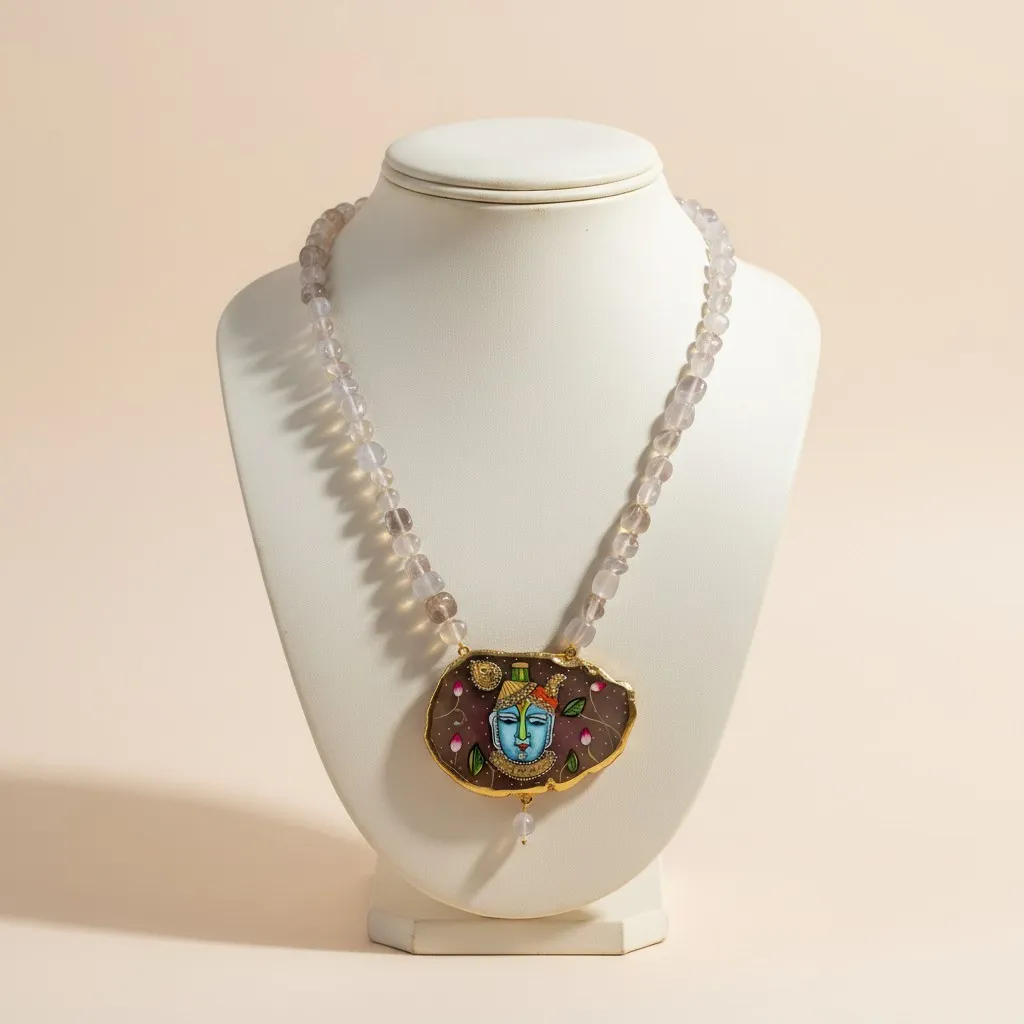
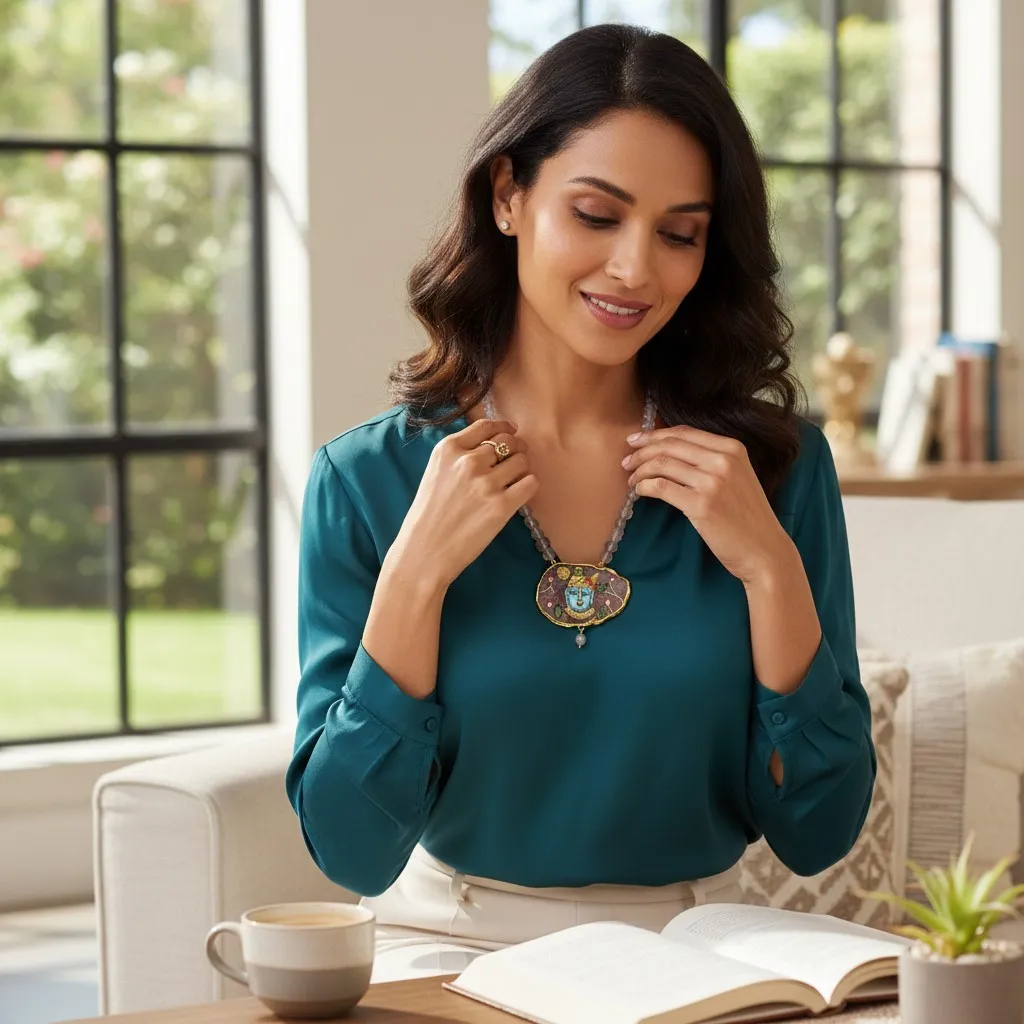
Hand-Painted Shrinathji Natural Stone Pendant Necklace
₹1,699 View & enquire →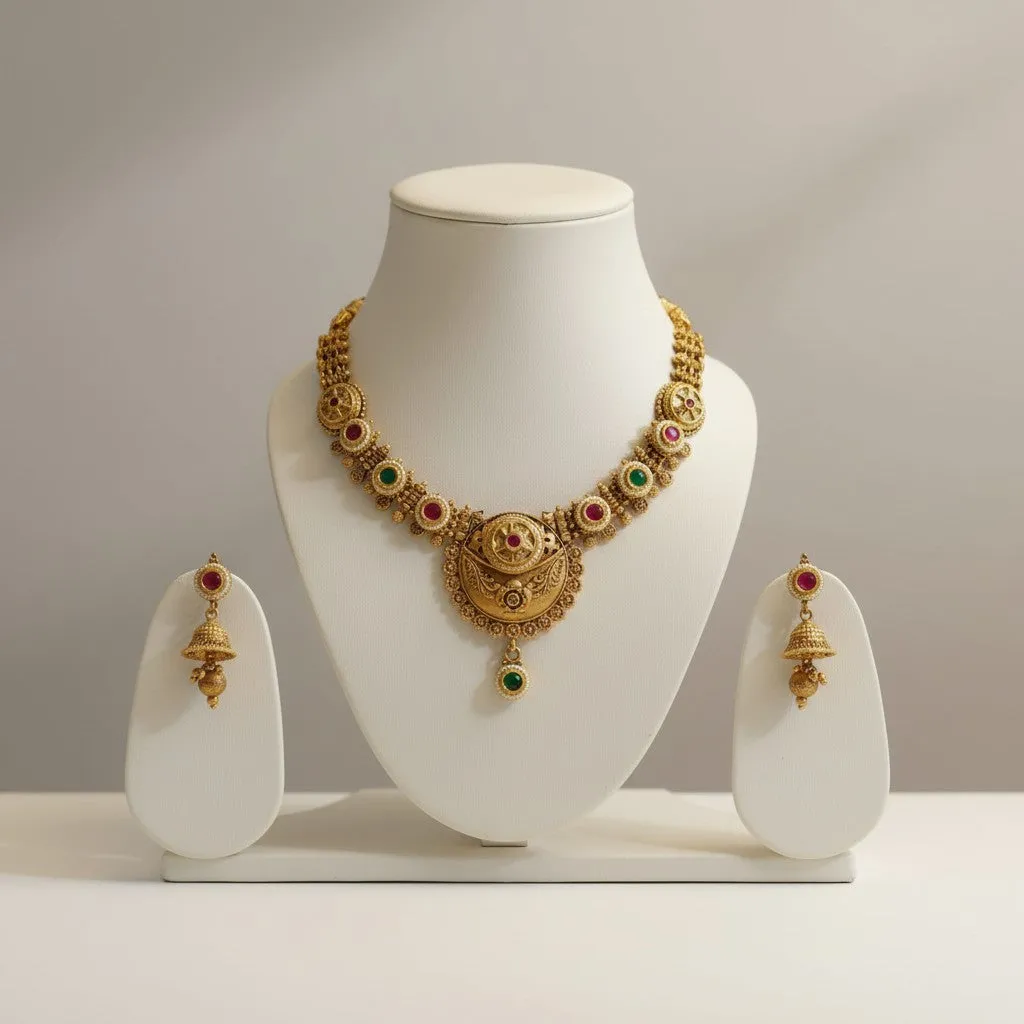
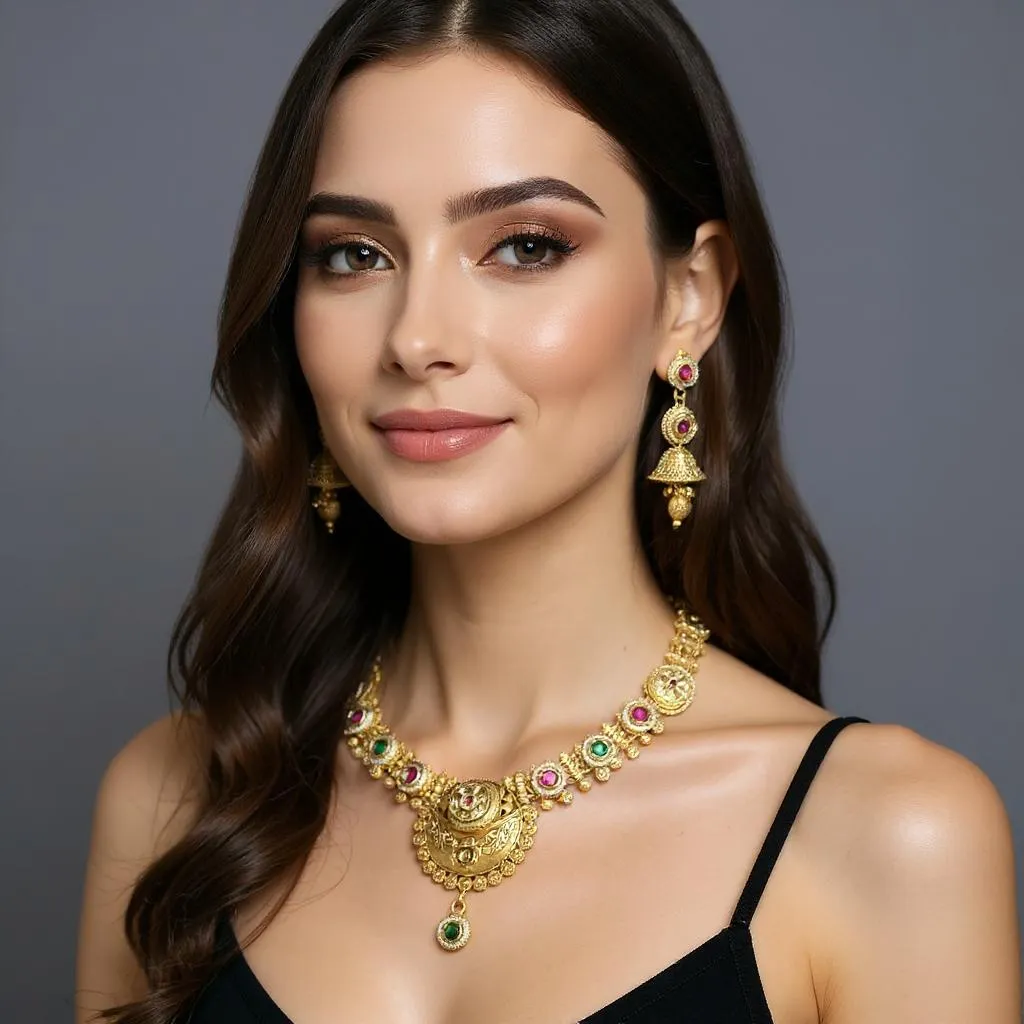
Antique Lakshmi Coin Necklace Set with Temple Jhumka Earrings
₹2,399 View & enquire →Personal styling, on WhatsApp
Not sure what suits you?
Message us — Ankita Gupta's team will help you choose and share close-up photos.
Ask us on WhatsAppKeep reading